Puppies are little sponges. They soak up the world around them, and their experiences help shape who they will become. If you’re planning on getting a puppy, understanding puppy development can help you choose the best pup for your family, and help you raise your puppy to their best potential. Those cute little fluffy blobs grow into adults in a heartbeat, so you don’t want to miss any important milestones!
Puppy Milestones: What to Expect and What You Should be Doing With Your Puppy
Neonatal Puppy Stage: 0 to 2 Weeks

Puppies are born blind, deaf, and toothless. Their senses are touch and taste. Most of their first two weeks is spent sleeping and growing. They are completely dependent on their mothers.
Transitional Stage: 2 to 4 Weeks

uppies’ eyes open when they are 14 to 21 days old. Puppy ears open from 14 to 18 days old. They start to develop their sense of smell during this period. The baby teeth start to come in, and they are sharp! They also start interacting with their littermates.
Weaning Puppy: 4 to 5 Weeks
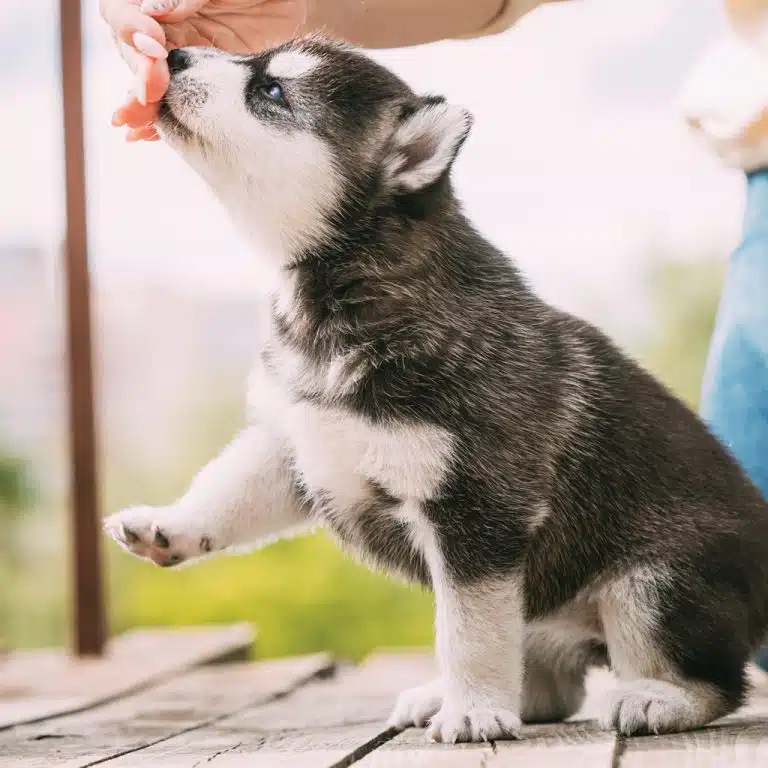
At around 4 to 5 weeks of age, puppies start to wean from their mothers. They’ll start skipping the milk bar and eating puppy food, typically watered down to mush at first. Some mothers allow their pups to nurse longer, and some are ready for the pups to get their meals elsewhere.
Socialization Stage: 4 to 12 Weeks
This is a critical development period. Puppies are learning lots during this stage. Missing certain lessons can impact them for life.
When Should You Bring Your New Pup Home? (THIS age is too early)
Unscrupulous or ignorant breeders will often let puppies go as young as possible because the pups don’t need their mothers for nourishment any longer. This is very common for puppy mills, who ship off very young puppies to arrive at pet stores still small and adorable. The smaller and cuter they are, the bigger the price tag they’ll fetch. With limited budgets and space for puppy care, shelters and rescue groups can also make this mistake. This is where fostering a family can make a big difference.
Just because pups can live off solid food at this time doesn’t mean it’s good for them to leave their litters. From 4 to 8 weeks, it’s critical that puppies interact with their mom and littermates. They learn to play and communicate with other dogs. This is the time they become more coordinated. They start playing with their littermates—pouncing, tumbling, grabbing, and mouthing. They learn bite inhibition: when playing, don’t bite down too hard! Puppies taken from their litters before 8 weeks can exhibit excessive mouthiness. (This can also happen with singleton puppies, who don’t have any brothers and sisters to play with to learn how to interact properly with other dogs.)

The Start of Puppy Socialization: 5 to 6 Weeks
Between 5 to 6 weeks, puppies begin to understand “other” and start to seek out interactions with other species, including humans. Quality breeders and rescue groups will socialize the puppies to different sights, sounds, floorings, people, and other dogs in a positive manner, pairing interactions with delicious treats. Socialization is not just exposure. It’s making sure the puppy has a great time during each interaction. Assessing the puppy for signs of fear or anxiety is very important at this stage. Symptoms include lip licking or tongue flicks, avoidance, yawning, whining, hiding, and hesitation. Puppies who are not adequately socialized during this time can develop fear of new things and people later. This most often manifests in aggression.
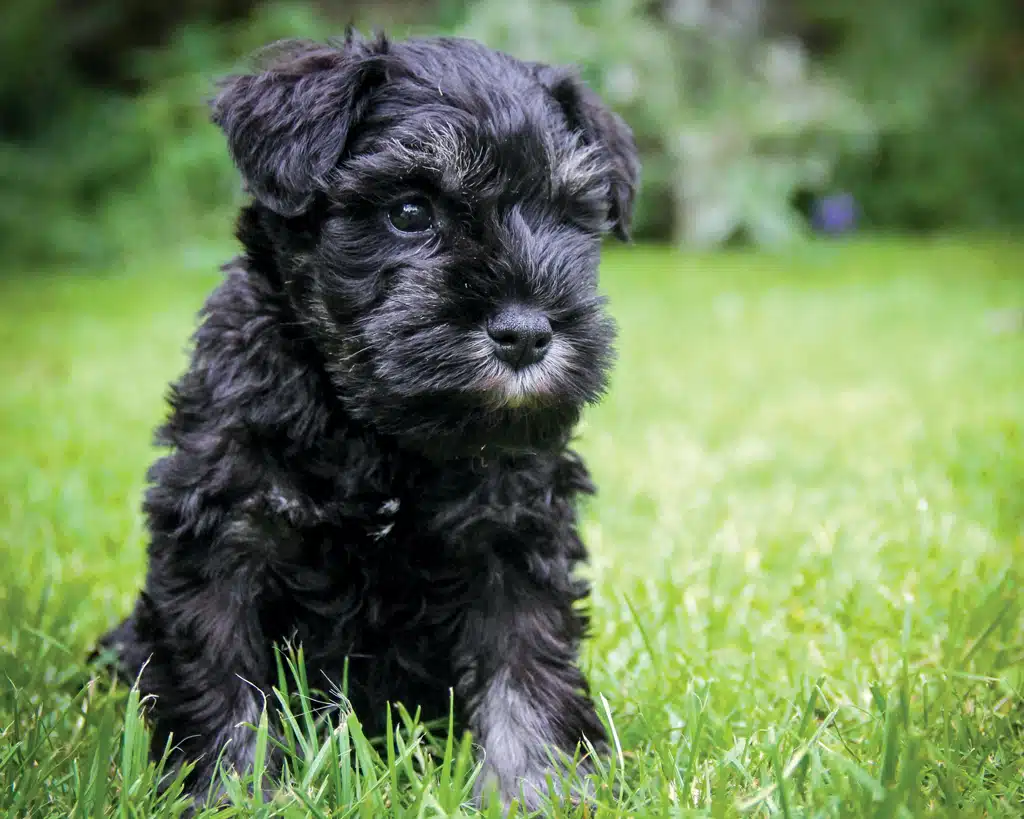
Above: Six-week-old Miniature Schnauzer puppy
Time to Bring Your Puppy Home: 8 to 9 Weeks
After 8 to 9 weeks, puppies can leave their litters and go to live with their new parents. Now, it’s your job to continue socialization. You only have until about 12 weeks of age to introduce your puppy to as much as you can in a positive manner. Use plenty of treats to make sure each experience is a wonderful one. If you see signs of fear or anxiety, get professional help quickly to help prevent your puppy from growing into an anxious or aggressive adult.
You can also start training your puppy as soon as you bring them home. You don’t have to wait! Work on your house training and teach them what they can and cannot chew. You can start teaching them to sit, lie down, come when called, and walk nicely on leash. Don’t forget husbandry behaviours—teach your puppy to be happily handled all over, from ears to tail. Sooner or later your puppy may get an ear infection or an injury, and you want to be able to easily handle him to take care of him.
Use positive reinforcement to teach your puppy that working for you is a good thing. Keep your sessions short and fun, as your puppy doesn’t have a great attention span yet. You’ll get a lot done in just 15 minutes at a time.

Above: 8-week-old German Shorthaired Pointer puppies
“Surviving puppyhood is an accomplishment—for you and your puppy! All the work you put into those young months will pay off through adulthood.”
Ranking and Testing Puppy Period: 3 to 6 Months
Puppies explore and test the boundaries of their world. They will try to become more independent. Continue training your puppy good manners. Continue working on your socialization, pairing new experiences with treats. Keep up the husbandry training so your puppy relaxes when examined all over.
This period is when lack of proper socialization will start to show. Puppies who have not been allowed to explore new environments by 14 weeks will not voluntarily do so. If forced, they will become extremely distressed. Your puppy may avoid going on walks or hide when strangers come to visit. They may also start barking at things they’re afraid of, including strangers or other dogs.
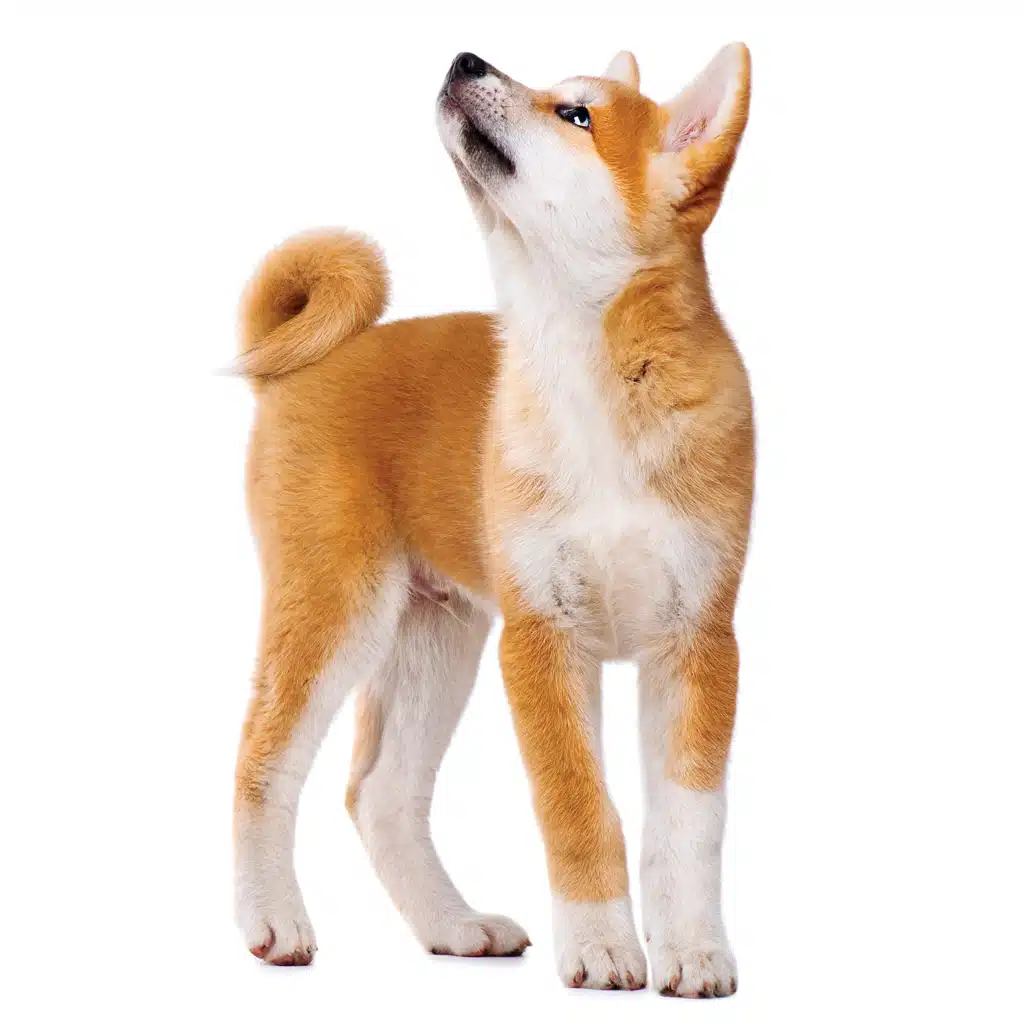
Three-month-old Shiba Inu puppy
Adolescence: 6 to 18 Months
Your puppy is a teenager! If you have a very small puppy such as a toy breed, they will be a physical adult at 1 year of age. If you have a medium-sized dog, such as a Golden Retriever, they will be an adult around 2 to 2 ½ years. Giant breeds reach maturity around 3 years. The teenage phase will correspond to your dog’s size.
During this phase, dogs continue to test boundaries. They’ll get hormonal. Males will start lifting their legs to pee and will become very focused on scents. Females can come into their first heat cycle between 6 to 24 months. Teens may get so caught up in following scents that they ignore your cues. Just have patience and continue your training. The more consistent you are, the more consistent your dog will be.

Above: Six-month-old Bolognese
Puppy No Longer: Entering Adulthood
Surviving puppyhood is an accomplishment—for you and your puppy! All the work you put into those young months will pay off through adulthood. You’ll start to forget about the shoes they chewed, all the paper towels you went through, and how you thought your pup would never learn to sleep through the night. All the trials and tribulations will fade into memory as you enjoy your grown dog for many years. Until the next puppy… when it starts all over again!